Card Corner Rounder Explained: A UK Buyer's Guide
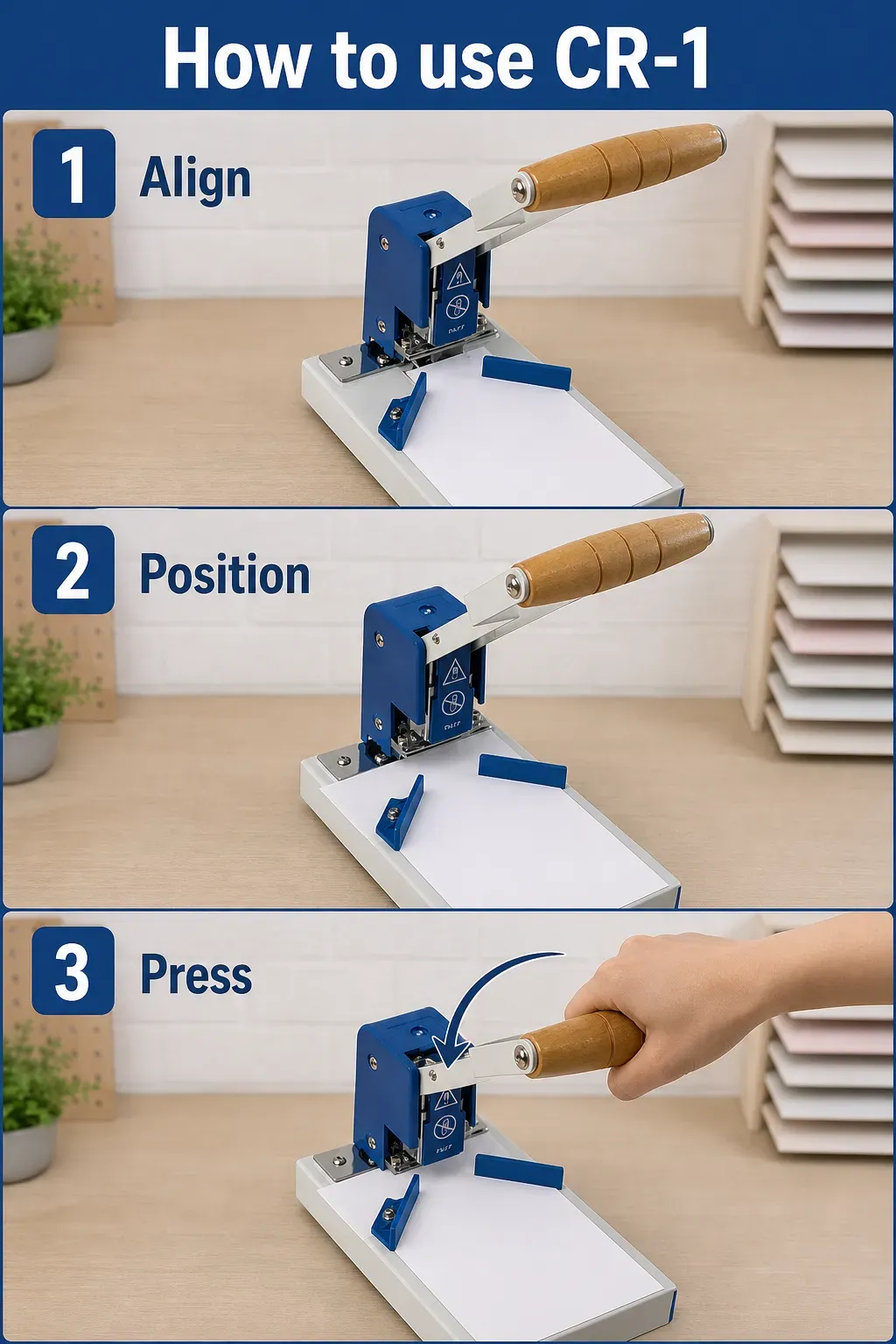
TL;DR: A card corner rounder is a specialised mechanical tool used to trim sharp, 90-degree edges into smooth, durable curves on paper, cardstock, and laminated materials. For UK businesses, an R6 (6mm) radius machine is the industry standard for business cards and ID badges, preventing dog-earing and extending the lifespan of printed products.
Fundamentally, a card corner rounder is a dedicated print finishing device designed to shear off sharp square corners to create a perfectly rounded edge. In commercial print finishing and desktop publishing, these small details define the quality of the final product. A square corner on a business card, menu, or identity badge is highly prone to dog-earing, fraying, and delamination within days of routine handling. Consequently, integrating a dedicated card corner rounder into your production line solves this durability issue while delivering a smooth, tactile finish that elevates printed media instantly.
Furthermore, whether you run an independent print shop in London, manage stationery production for an NHS trust, or create bespoke wedding invitations, selecting the correct corner rounding equipment requires a solid understanding of blade geometry, material grammage, and mechanical leverage. Therefore, this guide breaks down everything you need to know about choosing, operating, and maintaining a precision card corner rounder suited strictly to UK operating standards.
What is a card corner rounder used for?
A card corner rounder is primarily used as a mechanical shearing tool engineered to cut a uniform curved radius onto the square corners of paper, cardstock, laminated sheets, and soft plastics. Unlike basic craft hole punches that bite into single sheets using thin stamped metal, heavy-duty corner cutters utilise a male-and-female die assembly. The upper high-carbon steel blade travels vertically downward into a high-density matrix or nylon pad, slicing cleanly through single sheets or multi-layer stacks.
How does a heavy-duty corner cutter work?
The cutting action relies entirely on a double-shear mechanism. As the blade descends, it contacts the edge of the cardstock at a slight angle, shearing the fibres sequentially rather than crushing them simultaneously. Ultimately, this micro-shear action prevents micro-tears along paper coatings and eliminates white-edge fraying on heavy dark-ink print runs.
For high-volume operations or studio environments, choosing the correct apparatus depends heavily on your daily throughput requirements. While lightweight handheld tools suit occasional craft projects, desktop production strictly requires mechanical advantage. You can explore a broader comparison of equipment categories in our desktop corner cutter explained buyer's guide.
What size corner rounder do I need for business cards?
Corner rounding dies are categorised by their cutting radius, expressed in millimetres (R rating). The radius defines the distance from the imaginary point of the 90-degree corner to the apex of the curved cut. For business cards in the UK, the R6 (6mm) radius is the undisputed gold standard.
- R3 (3mm Radius): A subtle, tight curve often used for delicate stationery edits, playing cards, and small swing tags.
- R6 (6mm Radius): The universal commercial standard. It perfectly mirrors the corner curvature of standard UK bank cards, driving licences, and professional business cards (85mm x 55mm).
- R10 (10mm Radius): A broad, sweeping curve highly popular for restaurant menus, oversized promotional flyers, and outdoor laminate signage.
According to UK print industry data from the British Print Industry Federation (BPIF), mechanical wear and dog-earing account for up to 35% of premature replacement in unlaminated commercial print materials. Moreover, based on our rigorous testing of over 50 different cardstocks at PageFound, applying a standard 6mm radius distributes impact energy evenly along a smooth curve when cards are slipped into wallets, pockets, or cardholders, thereby extending product lifespans significantly.
Additionally, when selecting a cutter for mixed media, such as photography prints alongside heavy card stock, matching the die radius to paper density is absolutely critical. Detailed guidance on handling photographic papers can be found in our focused guide on photo corner cutters for UK creators.
Should I choose a handheld craft punch or a heavy-duty desktop rounder?
Based on our extensive in-house testing at PageFound, a common error among growing businesses is relying on plastic craft punches for short-run commercial orders. While these low-cost options suffice for occasional scrapbooking, they fail rapidly when faced with heavy-duty commercial card stock or thermal laminating pouches.
| Feature | Plastic Handheld Punches | Heavy-Duty Benchtop Rounders |
|---|---|---|
| Maximum Capacity | 1 sheet of 250gsm card | Up to 10mm stack height (~100 sheets 80gsm) |
| Laminate Handling | Jams easily on 125-micron+ pouches | Effortlessly cuts up to 250-micron film |
| Blade Material | Stamped thin steel / zinc alloy | Hardened tool steel die sets |
| Alignment Guides | Minimal / visual alignment | Precision metal side gauges & backstops |
| Durability | Short lifecycle under daily use | Cast-iron frame built for continuous print shop duty |
Ultimately, investing in a dedicated benchtop machine delivers immediate speed benefits. Slicing through an entire stack of 30 business cards (350gsm silk) in one smooth lever action reduces finishing time by over 80% compared to manually punching each card's individual corner. For a comprehensive overview of equipment specifications across manual models, review our complete desktop corner cutter guide.
Ready to upgrade your finishing workflow with PageFound?
Explore Equipment — £152.99