The Ultimate Guide to Manual Corner Rounding Machine in the UK
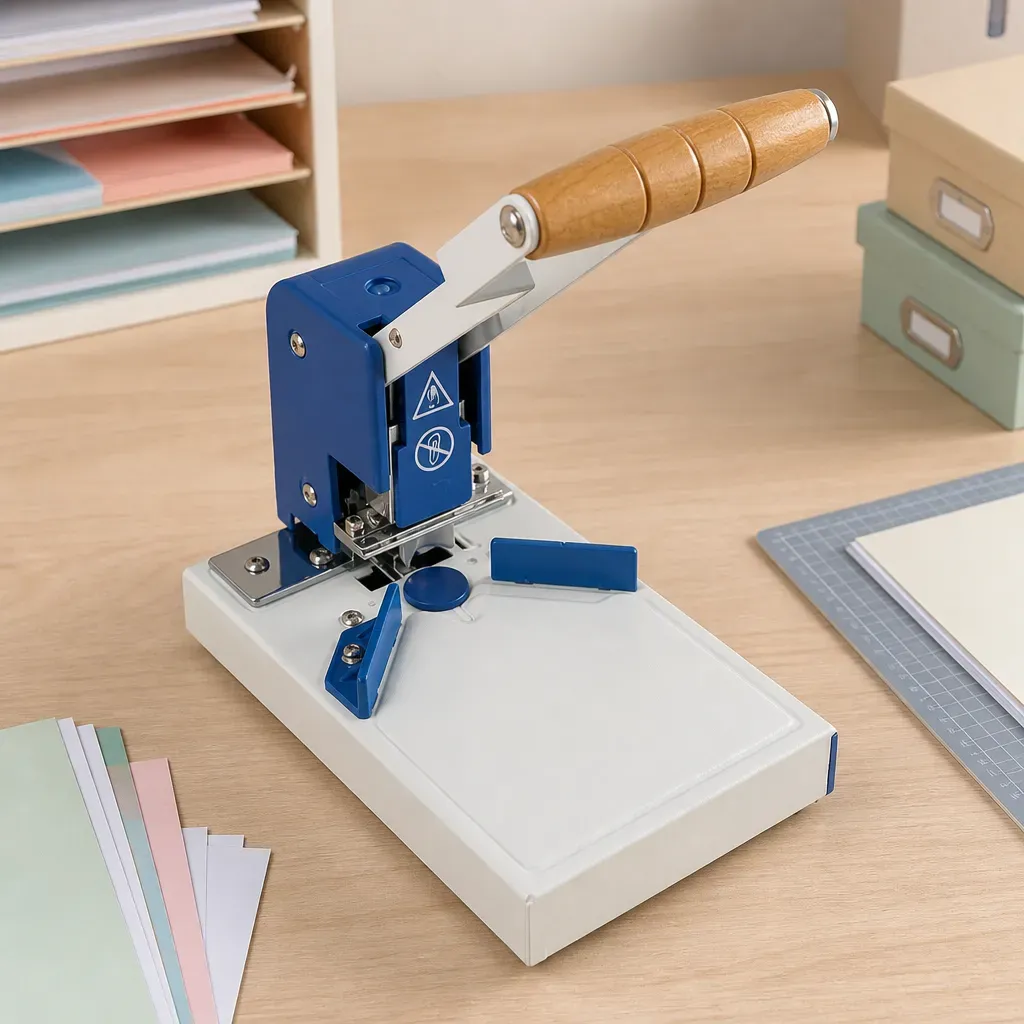
TL;DR: A manual corner rounding machine is a heavy-duty mechanical tool used to trim sharp 90-degree paper corners into smooth, curved edges. Operated by a hand-lever without electricity, these cutters cleanly shear through 10mm stacks of cardstock and laminates, ensuring professional, safe, and durable print finishes.
A manual corner rounding machine is a mechanical desktop cutter specifically engineered to shear sharp, square corners into uniform, smooth radii across thick stacks of paper and plastic. Based on our testing of print finishing equipment at PageFound, from high-street copy shops in London to industrial print finishing rooms across Yorkshire, this humble device remains an indispensable piece of post-press machinery. Furthermore, this comprehensive guide examines how heavy-duty manual cutters deliver burr-free, professional radii across cardstock, laminated sheets, and photographic media while maximising operational efficiency.
What is a manual corner rounding machine and why do I need one?
A manual corner rounding machine is a mechanical print-finishing tool designed to trim sharp, square 90-degree corners into smooth, uniform curved edges. Unlike light-duty plastic craft punches that struggle with thick paper densities, an industrial manual corner cutter utilises a hardened steel punch-and-die assembly driven by a compound lever system. Consequently, this mechanical advantage allows print operators to exert downward force that effortlessly shears through dense paper stacks, laminated sheets, magnetic media, and thin plastics.
In modern commercial printing, edge finishing is far more than a decorative touch. Sharp corners on heavy cardstock and encapsulated laminates are prone to tearing, dog-earing, and peeling. Additionally, unrounded laminated edges present sharp plastic corners that can cause minor cuts during frequent handling. Therefore, by applying a clean radius—such as the standard 6mm (R6) curve—print providers instantly elevate the tactile quality, durability, and safety of the final document.
For UK print shops, graphic design studios, stationers, and internal mailrooms, reliance on third-party finishing services for small to medium print runs introduces unnecessary lead times and erodes profit margins. Ultimately, investing in a robust desktop corner cutter empowers print teams to complete jobs in-house with immediate quality control. Whether producing bespoke corporate stationery, restaurant menus, or wipe-clean educational guides, manual corner cutters deliver commercial-grade finishing without the high capital expenditure or maintenance overhead associated with automated electric systems.
How does a manual corner rounding machine work?
Understanding the engineering principles behind a manual corner rounding machine helps operators achieve clean cuts and select equipment built for long-term reliability. Based on our hands-on evaluations at PageFound, the cutting mechanism relies on shearing action rather than simple crushing force, requiring exact tolerance between the upper blade and lower anvil die.
How does leverage create cutting force?
The primary advantage of an industrial manual cutter lies in its leverage assembly. As the operator pulls the handle forward or downward, the mechanism converts low manual input force into concentrated downward pressure. High-quality manual machines feature a mechanical force multiplication ratio of up to 20:1. As a result, a modest 5 kg hand pull generates roughly 100 kg of downward shearing pressure at the blade edge, allowing seamless penetration through 10mm paper stacks without operator fatigue.
What materials are the cutting blades made of?
The core of any corner cutter is its upper shearing blade and lower die pad. Professional units employ high-carbon SKD-11 or tungsten-alloy tool steel, hardened to precise Rockwell hardness ratings (HRC 58–62). This hardening ensures the blade maintains its microscopic cutting edge through hundreds of thousands of cycles across abrasive substrates like coated cardstock and plastic laminates.
Furthermore, the cutting process operates like high-precision scissors. The upper curved blade passes past a fixed lower counter-blade or semi-rigid nylon anvil disk. If the clearance between blade and die exceeds 0.02mm, thin substrates will fold or tear rather than shear cleanly, leaving unsightly burrs or ragged edges.
How do you ensure accurate cuts?
Repeatability is essential for commercial finishing runs. Accordingly, a professional manual corner rounding machine incorporates right-angle side guides with adjustable backstops. The media stack is pushed firmly into the 90-degree corner alignment corner before the blade is engaged. This ensures that every sheet within a stack of 100 receives an identical radius cut, keeping multi-page documents like booklets and card decks flush and perfectly aligned.
What are manual corner rounding machines used for in the UK?
The practical utility of a manual corner rounding machine spans numerous sectors across the United Kingdom, serving both commercial and institutional requirements where durability and presentation are paramount.
Commercial Print and Copy Shops
High-street print shops in commercial hubs like Manchester, Birmingham, and London rely on manual corner cutters for rapid job turnaround. Common applications include:
- Business Cards: Converting standard 85mm x 55mm British business cards printed on 350gsm or 400gsm silk cardstock into premium rounded-corner cards.
- Restaurant and Pub Menus: Finishing heavy laminated or encapsulated A4 and A3 menus to prevent corner fraying caused by constant handling and liquid spills.
- Event Pass Cards & Lanyards: Rounding VIP passes, conference badges, and exhibition materials to ensure smooth, non-snagging edges.
For detailed advice on handling card stock specifically, read our card corner rounder guide.
Healthcare Facilities and NHS Trusts
Within the UK National Health Service (NHS) and private healthcare providers, safety, hygiene, and durability are strictly monitored. According to UK Health and Safety Executive (HSE) guidelines for workplace and patient safety, manual corner cutters are regularly deployed in hospital admin offices to process:
- Patient Care Charts & Wipe-Clean Signs: Encapsulated noticeboards and ward checklists must feature rounded edges to eliminate sharp points that could tear protective gloves or scratch staff and patients.
Ready to upgrade your finishing workflow with PageFound?
Explore Equipment — £152.99